TL;DR: Investing from Dubai in 2026 means navigating a uniquely cross-regional news flow: local UAE exchanges (DFM and ADX), international markets that most expat investors still trade alongside their MENA positions, and the specific regulatory and policy environment of DIFC and ADGM. With 9,800 new millionaires arriving in the UAE in 2025 and Q1 2026 DFM trading volumes hitting AED 61 billion (up 48% year-on-year), the local market is genuinely active, but the news ecosystem can feel fragmented across English, Arabic, and international sources. This guide covers the news sources Dubai-based investors actually rely on, the regulatory framework that affects what you can and can't do, the time-zone-driven workflow, and how to structure information intake without burning the day on news rather than analysis.
If you want to consolidate your news flow into a single AI-curated feed, start a free 7-day NowNews trial no credit card required.
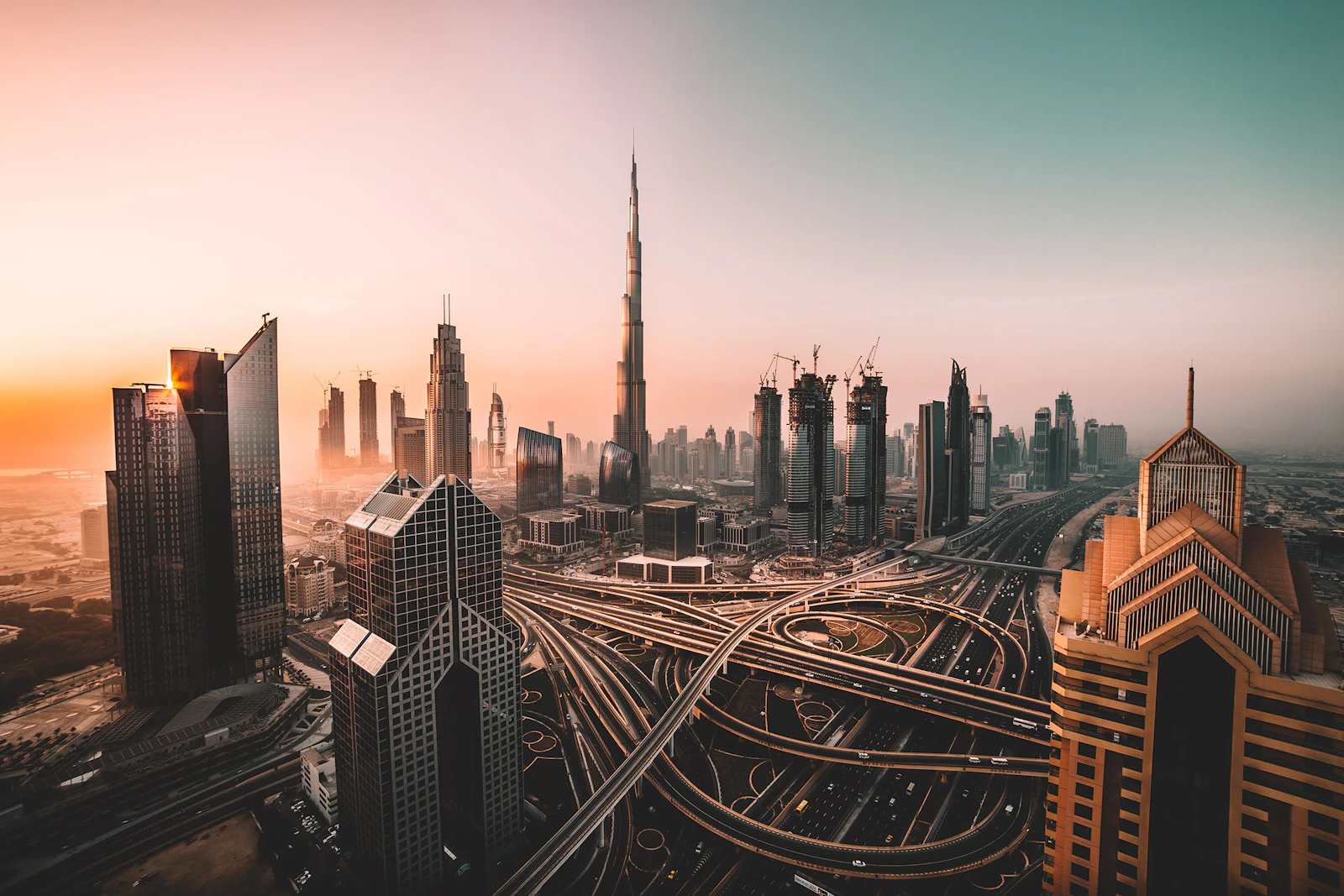
If you're investing or trading from Dubai, you're operating in one of the more interesting and arguably underserved financial-news environments in the world. The UAE attracted approximately 9,800 new millionaires in 2025, the highest net inflow globally, and most of them settled in Dubai. The Dubai International Financial Centre (DIFC) sits in the time zone gap between London/New York and Hong Kong/Tokyo, which means a serious investor here is often reading news that originated in three different regions before lunch. And the local market, the Dubai Financial Market (DFM), reported Q1 2026 average daily trading values above AED 1 billion, with foreign investors accounting for 54% of total trading value.
That's the good news. The less-good news is that financial news for Dubai-based investors is more fragmented than in most other major hubs. Bloomberg and Reuters cover the region but not deeply. Local outlets like Gulf News, The National, Khaleej Times, and Zawya cover the local markets well but are weaker on global macro. International outlets are great on US and European markets but treat MENA as a curiosity. The result: most investors here end up reading 5-7 different sources to get a complete picture, and they spend more time on news than they would in a more consolidated ecosystem.
This guide is the practical version of how to do this without going insane. It's written for the actual investor profile you'll find sitting in a Business Bay office or a JBR apartment: usually multi-currency, often holding both local UAE positions and international portfolios, sometimes trading crypto on the side (which the UAE actively encourages), and increasingly working with AI-driven tools rather than just reading Bloomberg headlines.
Why Dubai is a unique news environment for investors
Three structural factors make news flow here different from London, New York, or Singapore.
Time zone arbitrage by accident. When the European markets open, you're at lunch. When New York opens, you're heading home. The Asian markets are closing as you start your day. This means the news flow hitting your screen is rarely "today's news." It's a continuous stream of recent-events-elsewhere, with the local DFM and ADX sessions sandwiched in between. Productive investors here don't try to monitor all of it; they pick a primary market focus and treat the others as context.
Multi-market portfolios as default. Unlike a typical New York-based retail investor who mostly holds US stocks, the standard Dubai portfolio mixes UAE blue-chips (EMAAR, Emirates NBD, ADNOC Drilling, IHC, ADCB), US tech (NVDA, AAPL, TSLA), gold exposure (Dubai is one of the world's largest physical gold hubs), real estate, and often crypto. Each piece needs its own news flow. The total information demand is higher than for a single-market investor.
Expat-dominated population. Most investors here aren't UAE nationals. They're British, Indian, American, French, Russian, Chinese, South African, Lebanese, and the list keeps going. Each brings a different "home market" they still follow for personal reasons. So you'll see investors here who track DFM closely, US markets professionally, and the FTSE or Sensex personally. The news mix reflects this.
A 2026 Dubai Future Finance Week (DFFW) report and the DIFC Future of Finance series both flagged this fragmentation as a structural feature of the market here, not a temporary issue. Investors who develop a personal system for managing multi-source news flow tend to outperform those who don't, by a margin that's hard to quantify but anecdotally significant.
The local news ecosystem: what actually matters
Let's start with the sources you'll want to know about, organized by what they're actually useful for.
Primary UAE financial news sources
Gulf News (Business & Markets) is one of the most-read English-language outlets covering DFM, ADX, and Nasdaq Dubai. Strong on local company news, IPO coverage, and policy announcements. Their daily Cheques & Balances business newsletter is worth subscribing to. Free, daily, fast to read.
The National (Business) covers UAE and broader MENA business with high editorial quality. Owned by ADQ (Abu Dhabi sovereign), which gives it good access to regional companies. Particularly strong on UAE corporate news, sovereign wealth fund activity (ADIA, Mubadala, ADQ), and policy.
Khaleej Times (Business) is the third major English daily and provides solid daily coverage of UAE markets. Less analytical than The National, more accessible than Zawya.
Zawya (now part of Refinitiv/LSEG) is the institutional-grade source for MENA financial data and news. More expensive (paid tiers), but the quality of the data and the depth of coverage on regional companies is unmatched in the local ecosystem.
Arabian Business covers the broader business landscape with focus on industries beyond pure finance (real estate, retail, tourism, tech). Useful for second-order news that affects listed companies.
Bloomberg Middle East and Reuters Middle East are the international wires covering the region. Less local-context than Gulf News or The National, but better integration with global market flow.
Regulatory and exchange sources
Dubai Financial Market (DFM) circulars at dfm.ae publish official announcements: trading holidays, settlement changes, listing announcements, regulatory notices. If you trade local stocks, this is required reading. Most investors don't read these directly; they should.
Abu Dhabi Securities Exchange (ADX) announcements at adx.ae serve the same role for ADX-listed names. ADX is somewhat larger by market cap than DFM, with different listed companies.
Securities and Commodities Authority (SCA) regulates both DFM and ADX. Their announcements and consultations are where structural changes (settlement cycles, listing rules, fee structures) get communicated.
DFSA (Dubai Financial Services Authority) regulates within DIFC specifically. If you work with a DIFC-based broker or hold accounts there, DFSA rules apply.
FSRA (Financial Services Regulatory Authority) does the same for ADGM in Abu Dhabi. Same general role, separate jurisdiction.
VARA (Virtual Assets Regulatory Authority) is the Dubai-specific crypto regulator. If you trade crypto, VARA notices affect what's legal, what's restricted, and what platforms can operate locally. This is a fast-moving regulatory space.
Real estate and gold-specific news
Property Finder and Bayut blogs cover the Dubai real estate market, which is investable through several REITs (Emirates REIT, ENBD REIT, ALSALAM) and indirectly through listed developers (EMAAR, DAMAC, Sobha, Arada).
Dubai Multi Commodities Centre (DMCC) publishes gold and commodities trade data. Dubai is one of the world's largest physical gold trading hubs, and the DMCC's data is the official source for what's actually moving through the market.
S&P Global Commodity Insights and OPEC monthly reports matter because the UAE is a major oil exporter (via ADNOC, partly listed) and the macro economy here is more oil-sensitive than the headline GDP numbers suggest.
International sources you'll still need
Even if your portfolio is UAE-focused, you'll need at least one or two international sources for global macro context. The realistic minimum:
- Bloomberg or Reuters for breaking global news.
- The Wall Street Journal or Financial Times for daily depth.
- One US-focused outlet (CNBC, Yahoo Finance) if you trade US names.
- A central bank watcher (depending on your portfolio: Fed for US exposure, ECB if European, BoE if UK ties, etc.).
This is where the news volume explodes. Adding three international sources on top of three local ones means you're managing six daily feeds. This is exactly the workflow problem that AI-curated briefing tools (more on those later) help solve.

The regulatory landscape that shapes what you read
Knowing the regulators helps you make sense of which news items are likely to actually affect your portfolio. The UAE financial system has several layers worth understanding.
Onshore mainland (most retail investors): regulated by the Securities and Commodities Authority (SCA). DFM and ADX are SCA-regulated. Standard rules around brokers, custodians, and investor protections. Most retail brokerage accounts opened here fall under SCA.
DIFC (Dubai International Financial Centre) is a financial free zone with its own legal framework (based on English common law, separate from UAE civil law) and its own regulator (DFSA). Companies and funds based in DIFC operate under DIFC law. If you have an account with a DIFC-based wealth manager, family office, or fund, DFSA rules apply. The 2026 DIFC Future of Finance report emphasized that DIFC now hosts the majority of large international banks, wealth managers, and family offices operating in the MEASA region.
ADGM (Abu Dhabi Global Market) is the equivalent free zone in Abu Dhabi, regulated by FSRA, with similar English-common-law structure. Slightly newer than DIFC but rapidly growing, particularly in the digital assets and sustainable finance spaces.
VARA (Virtual Assets Regulatory Authority) specifically regulates crypto within Dubai. The UAE's crypto framework is genuinely one of the most progressive globally: tax-free for individuals, with clear licensing for exchanges. VARA decisions affect what tokens can be traded, what KYC applies, what custody requirements platforms must meet.
For news interpretation: when you see a regulatory headline, identifying which regulator it comes from tells you which part of the market is affected. A VARA announcement on stablecoins doesn't affect your EMAAR shares. An SCA decision on settlement cycles doesn't change how DIFC-based funds operate. The geography of UAE regulation is layered, and getting the layer right saves a lot of confusion.
A useful frame: the average expat investor here probably has exposure to onshore SCA-regulated brokerage (for DFM/ADX stocks), a DIFC-regulated wealth manager (for international portfolios), and possibly a VARA-regulated crypto exchange. Three different regulators, three different news streams to monitor. Most retail investors collapse this in their heads, which leads to confusion when a headline applies to one but not the others.
The time-zone-driven workflow that actually works
The Dubai workday has a specific rhythm if you're managing a multi-market portfolio. Here's the pattern most disciplined investors converge on:
5:30-7:00 AM Dubai time: Asian markets are wrapping up, Tokyo and Hong Kong are closing. If you have Asian exposure, this is the window to check overnight moves. Most expats here don't, but the China-AI theme has been significant enough in 2026 that many investors have started paying attention.
7:00-9:30 AM: The window to read the local newspaper coverage of overnight US closes and the early UAE business news. Gulf News and The National hit your inbox in this window. This is your morning briefing time. Treat it as bounded reading, 15-30 minutes, not a 90-minute scroll.
9:30 AM: Coffee. Look at the markets. Don't trade in the first 30 minutes; algorithmic activity on regional names dominates that window.
10:00 AM: DFM and ADX open. If you trade local names, this is your primary trading session window. Local market liquidity is concentrated in the first 90 minutes and the last 90 minutes.
11:00 AM-2:00 PM: European markets open (London opens at 12:00 PM Dubai time, others around 11:00 AM). If you have European exposure, this is when overnight European news becomes actionable. Earnings reports from major European companies often land in this window.
2:30 PM: Local markets close. Quiet zone for UAE stocks. Use this time for research, not trading.
4:30-5:30 PM: US futures start to move ahead of the New York open. If you trade US names, position now or wait for the actual open.
5:30 PM Dubai time: New York opens. For most Dubai-based investors holding US exposure, this is the most consequential hour of the day. The 4:30 PM EST close = 1:30 AM Dubai time the next morning, which is why most retail investors here can't trade the close.
Evening: Either you trade US, in which case you're working another 2-4 hours, or you turn off the screens and let the overnight news accumulate for tomorrow's morning briefing.
The hardest part is not trying to monitor everything continuously. The investors who consistently do well here have a specific market focus (usually 1-2 primary markets) and treat the others as context. The investors who try to actively trade across UAE, US, European, and Asian markets simultaneously typically burn out within 12-18 months.
What to actually do with all this news
The volume problem leads to the next question: given that there's more financial news available to a Dubai-based investor than to almost anyone else in the world, how do you turn it into decisions instead of just consuming it?
A few patterns that work in practice.
Pattern 1: One primary briefing, one local check, one global check
Most successful Dubai-based investors I've talked to have settled into a three-source morning routine. One primary briefing (Morning Brew, Axios Markets, a custom AI-generated summary, or similar) for global macro. One local check (Gulf News or The National business section) for UAE-specific news. One sector or asset-specific check (a sector newsletter, an analyst note, or a specific stock screener) for whatever they're actively trading.
That's it. Total time: 25-40 minutes. The discipline is bounded reading, not "free time scrolling."
This three-source approach is also what AI-curated platforms like NowNews are designed for: instead of reading 5-7 different news sources, you read one personalized briefing scoped to your watchlist (US stocks, UAE stocks, gold, crypto, whatever) plus a local source for hyper-regional news. The platform's daily Summaries cover topics like US Economy, Energy, AI, China, Tech, and individual major assets, and the custom briefing feature lets you set your own tags and date ranges. For an expat trading both DFM and US names, this can cut morning news time by half or more.
Pattern 2: Pre-classified news during trading hours
When markets are open, raw news flow is too noisy to read productively. The serious investors here use feeds that filter for impact: only critical or high-impact news on watchlist names. Bloomberg's Customizable alerts do this for institutional users. Retail-accessible alternatives include AI-driven feeds that pre-score news by predicted market impact. NowNews' Impact Feed is one example; it filters by impact level and directional bias, scoped to assets in your watchlist.
The practical result: during market hours, you're not reading news. You're seeing the 2-5 items per day that actually matter, alongside the price action.
Pattern 3: Document-level analysis after hours
The most valuable work for active investors usually happens after the trading day, when you can read longer documents carefully: an earnings release, an analyst note, a regulatory ruling, an SEC filing for a US name, a DFM circular for a local one. This is where deep analysis tools become useful. AI document analyzers can extract sentiment, surface contradictions between narrative and data, and pull key metrics in minutes instead of the 30-45 minutes it takes to read a 30-page document manually.
For Dubai-based investors specifically, the volume of relevant documents across multiple markets makes this kind of AI-assisted reading more valuable than it would be for a single-market investor. Reading every 10-K for the 8 US names in your portfolio plus every annual report from the 5 DFM names plus every UCITS filing for your European funds is a substantial pile. Tools that compress this without losing signal pay for themselves quickly.
Pattern 4: Weekend deep work
Almost every disciplined investor here protects Sunday morning (UAE weekend is Saturday-Sunday) for deeper research and portfolio review. Catch up on the week's news that didn't fit into daily briefings. Re-read theses on existing positions. Look at sector themes you've been tracking. This 2-3 hours of focused work on the weekend often produces more value than the weekday news scrolling combined.
How AI tools change the workflow for Dubai investors specifically
The reason AI-assisted news platforms have grown rapidly in 2026, and why they're particularly useful in the Dubai context, comes down to four points:
Volume compression. A Dubai-based investor managing multi-market exposure faces 2-3x the daily news volume of a single-market investor. AI filtering cuts this back to a manageable level by scoring news for relevance and impact against your specific watchlist. The hours saved are real, often 5-10 per week.
Language consolidation. Some of the best UAE-specific news appears in Arabic-language outlets before English. AI-driven translation and summarization can surface this content for English-speaking expats without requiring them to follow Arabic news directly. The technology here has improved meaningfully in 2026.
Cross-market read-throughs. When a US tech earnings report hits, the read-through to UAE-listed tech-adjacent names (DFM-listed e-commerce, fintech, telecom) is something most retail investors miss. AI tools that map second-order effects across markets surface these connections faster than manual analysis. NowNews' Impact Feed does this kind of cross-asset impact mapping.
Time-zone-asynchronous briefings. A morning briefing that's pre-generated based on what happened during your sleep is more useful in Dubai than in New York, where most market action happens during your waking hours. Dubai investors who hold US positions essentially need a "what did I miss" summary every morning, and a personalized AI-generated briefing is structurally better at this than a generic newsletter.
For UAE-based investors specifically, the case for spending a small monthly amount on AI-assisted news tools is unusually strong, because the time savings compound across multiple markets. NowNews offers a 7-day free trial to test this against your existing workflow; the platform is built around exactly this multi-market, time-zone-shifted use case, even though it's not specifically a Dubai product.
What's different about UAE-listed companies
If you're investing in DFM or ADX names, a few things differ from what you'd be used to in US or European markets, and these affect how to read news about them.
Quarterly reporting is less detailed. UAE-listed companies report quarterly, but the depth of disclosure is generally less than US companies. Don't expect 40-page 10-Q equivalents. Most UAE quarterly reports are 6-15 pages. The investor relations narrative is also typically thinner.
Investor relations practices vary widely. Some UAE-listed names (EMAAR, ADNOC entities, the larger banks) have polished investor relations and English-language analyst day presentations. Others, especially mid-cap and family-controlled companies, have far less developed IR. Reading public news may be most of the information you can practically access.
Sovereign wealth fund presence affects everything. ADIA, Mubadala, ADQ, IHC, and various other state-affiliated entities own significant stakes across the UAE-listed universe. This affects governance, dividend policy, capital allocation, and timing of major announcements. News interpretation often requires understanding which sovereign entity has influence over which company.
Sharia-compliance considerations. DFM operates with Sharia-compliant principles. Some specific instruments (conventional bonds, certain derivatives) work differently than in non-Sharia markets. Sukuk (Islamic bonds) are a major asset class here that doesn't exist in the same form elsewhere.
Family-controlled businesses. Many UAE-listed companies have substantial family ownership and management. This affects how news flows: announcements may come through patriarch interviews or government statements rather than through formal company filings. The news flow looks different.
Annual general meetings matter more. AGMs at major UAE companies often produce more material news than quarterly reports. Pay attention.
The English-Arabic news dynamic
A practical issue for non-Arabic-speaking investors: meaningful news about UAE companies sometimes appears in Arabic outlets before English ones. Outlets like Al Bayan, Emarat Al Youm, Al Khaleej, and Asharq Al-Awsat cover regional business in Arabic with depth and sometimes earlier access than English-language equivalents.
A few practical workarounds:
- Google Translate or DeepL for occasional Arabic article translation. Good enough for most news comprehension; not great for nuance.
- Twitter/X accounts of UAE financial journalists who post bilingually. Many of the better ones post quick takes in both Arabic and English.
- AI summarization tools that can ingest Arabic content and produce English summaries. Several of the major financial AI tools now handle Arabic well.
- Bilingual news platforms like Asharq Bloomberg, which publishes parallel English and Arabic content.
For most expat investors, the news that doesn't make it into English-language sources is genuinely available in real time through these workflows; the bottleneck is usually awareness that the Arabic content exists, not the language itself.
How to handle crypto news in the UAE context
The UAE is one of the more crypto-friendly jurisdictions globally, with a clear regulatory framework (VARA in Dubai, FSRA in ADGM, and the broader UAE Cabinet regulations) that makes crypto trading legal and tax-efficient for individuals. This affects what news matters to you.
VARA announcements matter for licensing and what platforms can operate locally.
Major exchange news (Binance, Bybit, OKX, Bitget, Coinbase, Kraken) affects both your operational situation (which exchange you can trade on) and the broader crypto market.
Tax-related news (rare in UAE since personal trading is tax-free, but corporate crypto activity has VAT and corporate tax implications under recent rules) is worth tracking.
Global crypto macro (US ETF approvals, regulatory shifts in major jurisdictions, major hacks) affects sentiment and pricing globally and therefore matters for your positions regardless of where you're based.
The honest framing: most of the genuinely market-moving crypto news comes from the US, EU, and Asian regulatory and exchange ecosystem. Dubai is a comfortable place to trade from, but the news driving prices originates elsewhere.
A practical morning routine for Dubai investors
Putting this all together, here's a sample routine that combines the elements above:
6:30-6:45 AM: Coffee. Open one AI-generated briefing scoped to your watchlist (Summaries from NowNews or a similar personalized service). 10-15 minutes of focused reading. This is your global and personal macro context.
6:45-7:00 AM: Skim Gulf News business section or The National business briefing. UAE-specific news, IPO coverage, regulatory announcements. 10-15 minutes.
7:00-7:15 AM: Check Twitter/X feed of 5-10 financial journalists and macro analysts you trust. Don't go down the rabbit hole. 10-15 minutes hard cap.
7:15-9:30 AM: Personal time, gym, family, work-prep. Not news.
9:30-10:00 AM: Pre-market review. Look at the local market opening setup. Check pre-market for any major US news that broke overnight.
10:00-11:30 AM: Local market trading session focus if you have UAE positions. Otherwise, deep research time.
12:00-2:00 PM: Lunch + global macro context (Bloomberg, Reuters, FT) for European market open and ongoing US futures.
Afternoon: Either work-related or research-related. No news.
5:00-6:00 PM: US open. If trading US names, position now. Otherwise wait for the overnight news cycle to resolve.
Evening: Document reading if needed. Otherwise off.
That's roughly 90 minutes of focused news consumption per day, with structured timing. Compare against the unstructured pattern (constant phone-checking throughout the day) and the gains in cognitive efficiency are substantial.
Frequently asked questions
Is the Dubai Financial Market (DFM) worth trading actively?
It depends on your portfolio size and time commitment. The DFM is meaningfully active in 2026 (AED 61B in Q1 trading volume, up 48% YoY, with average daily values above AED 1B), and foreign investor participation has grown to 54% of trading value. For investors based locally, trading DFM names offers familiarity with the local economy, tax efficiency, and access to companies tied to UAE growth themes. The trade-offs are lower liquidity for many names compared to US large-caps, more concentrated sector exposure (real estate, financials, energy dominate), and less analyst coverage. Most successful Dubai-based active investors hold both UAE and international positions rather than concentrating on one.
How does taxation affect my news priorities?
The UAE's personal income tax of 0% and 0% capital gains tax on individual securities trading meaningfully changes the news priorities compared to high-tax jurisdictions. Tax-driven news (year-end loss harvesting, deferred-tax considerations, IRA contribution timing) is irrelevant here. What matters more: news that affects the corporate tax rate (introduced at 9% in 2023), news on free-zone benefits, and any policy changes affecting expat status. The dominant news priorities should be operational and investment-related, not tax-related, which is genuinely different from how investors in the UK, US, or most of Europe should structure their reading.
Should I subscribe to Bloomberg Terminal or use cheaper alternatives?
Bloomberg Terminal is unmatched for institutional-grade data and is the standard at DIFC-based firms. For individual investors or small family offices, the ~$24,000/year cost is hard to justify. Cheaper alternatives that cover the UAE market reasonably well include Refinitiv Workspace (formerly Eikon, less expensive than Bloomberg but still institutional-tier), Zawya (MENA-focused), and combinations of free retail tools with paid newsletter subscriptions. AI-curated platforms like NowNews can fill the gap for active retail investors at a fraction of institutional pricing, though they don't replicate full-terminal functionality.
How do I handle multi-currency positions in my news flow?
Currency-specific news matters more here than in single-currency portfolios elsewhere. The AED is pegged to the USD, which means UAE-based investors don't have direct AED/USD currency risk but do have indirect exposure to dollar moves through any non-USD holdings. Practical approach: monitor major currency pairs (EUR/USD, USD/JPY, GBP/USD) if you have non-USD international exposure. Monitor the USD index (DXY) as a leading indicator for broader risk sentiment. The AED-pegged simplicity means you can mostly ignore AED-specific currency news; it tracks the dollar.
What about Sharia-compliance considerations in news interpretation?
DFM and ADX both have Sharia-compliant frameworks for their general operations. Specific instruments require attention: sukuk (Islamic bonds) trade differently than conventional bonds, certain derivatives may not be available, and short selling has specific rules. For most retail investors, the practical effect is that some news that would be relevant in non-Sharia markets (conventional bond market moves, certain derivative-driven dynamics) is less directly applicable. Most listed UAE companies are Sharia-compliant; the news flow doesn't typically differentiate.
How does NowNews specifically help a Dubai-based investor?
The platform's design suits the multi-market, time-zone-shifted situation that's typical here. The daily Summaries cover global topics and major assets so you have one personalized briefing instead of five general newsletters. The Impact Feed filters news by predicted market impact and scopes to your watchlist, so you can monitor UAE and international names from a single feed during trading hours. Deep Analysis ingests documents (earnings releases, regulatory filings, analyst notes) for the deeper after-hours work. The 7-day free trial gives you full access to test the workflow against whatever you currently use.
Are there UAE-specific investment news platforms I should know about?
Beyond the general business outlets (Gulf News, The National, Khaleej Times), specialized sources include Argaam (Arabic-language Saudi-focused but covers GCC), Mubasher (regional financial data with English option), Trickle (GCC-focused podcast and newsletter), and various brokerage-specific research from Emirates NBD Capital, ADCB Securities, and similar. For institutional-tier MENA-specific coverage, Refinitiv's Zawya is the standard.
How do I find investment opportunities specifically in the UAE market?
The patterns that work: track sovereign wealth fund moves (when ADQ, Mubadala, IHC make major investments, the names involved often re-rate), follow IPO activity (DFM has had a wave of IPOs in 2024-2026 with significant first-day performance), monitor regulatory shifts that affect sector competitiveness, and pay attention to family-business succession news (often produces M&A or restructuring opportunities). The general framework for using financial news to find investment ideas applies; you just adapt the source mix to the regional context.
How does the news flow compare between expat investors and UAE nationals?
Different mixes in practice. UAE national investors tend to have more access to family-business networks and informal information channels, but they often rely on the same English-language and Arabic-language news sources for formal news. Expat investors typically depend more heavily on formal news sources (papers, newsletters, AI tools) because they don't have the same informal networks. This actually makes structured news consumption more important for expats: it's where most of their information edge will come from.
Is it worth attending Dubai Future Finance Week or similar events?
For serious investors, yes. The Dubai Future Finance Week (11-15 May 2026) and the broader fintech and capital markets calendar in Dubai produce concentrated networking and information flow. The actual news that emerges from these events often shapes the next quarter or two of regional themes. For passive investors or those mostly trading international markets, attendance is less essential, but the post-event coverage in local press is worth following.
The bottom line
Investing from Dubai in 2026 means managing more news flow than in most other major financial centers, across more markets, in more languages, with more regulators to track. The investors who handle this well have a structured routine (bounded reading windows, a small number of trusted primary sources, clear separation between idea generation and trading time), use AI-assisted tools to compress the mechanical scanning, and focus their cognitive budget on the 1-2 markets where they have actual edge rather than trying to actively trade everywhere.
The macro setup for Dubai-based investing is unusually favorable in 2026. The DFM's foreign investor participation is at record levels. The UAE attracted the world's largest net inflow of millionaires in 2025. DIFC continues to grow as a global wealth hub. The tax framework remains genuinely attractive. The challenge isn't opportunity; it's information management.
If you want to test how an AI-curated news platform changes the math on a multi-market workflow, NowNews offers a 7-day free trial of the full platform. The Summaries, Impact Feed, and Deep Analysis features are particularly well-suited to the time-zone-shifted, multi-market reality of investing from this part of the world.
This article is updated as the UAE financial news landscape evolves. Last reviewed: April 2026. Have a specific Dubai-related investing topic you'd like to see discussed? Contact us.