TL;DR: AI can't predict stock prices with the accuracy most marketing suggests. But it can do something more valuable: detect patterns in news flow, sentiment shifts, and data relationships faster than any human. This guide separates what AI actually does well from the overselling.
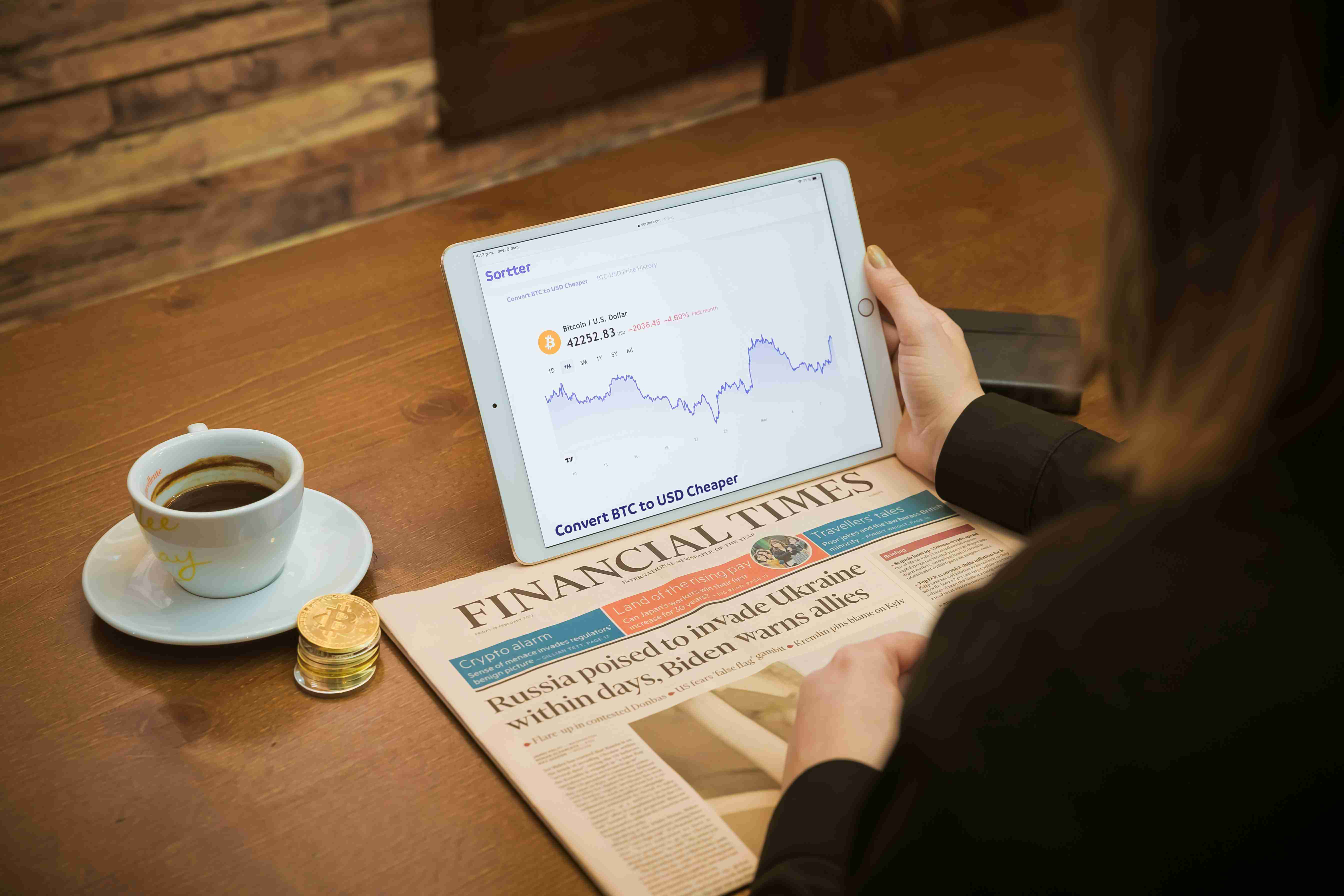
Every few months, a new AI stock prediction tool launches claiming it can forecast market moves with remarkable accuracy. Most of these tools don't survive a year. The ones that do usually turn out to be using AI for something different than pure price prediction.
This matters because "AI for stock market predictions" has become a marketing phrase that means almost nothing. Understanding what AI actually does well in finance, and what it genuinely can't do, is the difference between using it as a tool and being sold a fantasy.
The hard truth about predicting stock prices
Stock prices are influenced by millions of variables, most of which are unknowable. Earnings surprise announcements, central bank decisions, geopolitical events, CEO scandals, random tweets from influential accounts — all of these move markets and none of them can be reliably predicted from historical data.
This is why every academic study on pure price-based prediction reaches a similar conclusion: models can find patterns in the past, but those patterns rarely generalize to the future with enough accuracy to overcome transaction costs.
The 2023 study published in the Journal of Finance on machine learning in asset pricing confirmed what quants have known for years: the alpha generated by even sophisticated ML models is small and disappears quickly once a strategy becomes known.
If someone tells you their AI predicts prices with 70% accuracy, one of two things is true. Either they're overfitting their model to historical data (the most common mistake), or they're using AI for something other than pure price prediction and calling it "stock prediction" for marketing reasons.
What AI actually does well in finance
The useful applications of AI in investment decisions aren't about predicting where a stock will close next Tuesday. They're about processing information faster and more consistently than humans can.
Document analysis at scale. A human analyst can read maybe 20 earnings reports deeply per quarter. An AI can process 2,000 of them in the same time, extracting metrics, flagging anomalies, and comparing against peers automatically.
Sentiment detection in text. Modern language models can read a press release or earnings call transcript and score the tone with surprising accuracy. They catch hedging language, defensive phrasing, and subtle shifts in management's confidence that humans miss when skimming.
Pattern recognition across assets. When a news event hits, AI can instantly identify which other assets in your portfolio or watchlist are likely to be affected, and in what direction. This is impossible for a human monitoring more than a handful of positions.
News filtering by impact. Instead of showing you every mention of a ticker, a well-designed AI ranks news by likely market impact — filtering out the 95% that don't matter and surfacing the 5% that do.
NowNews is built around these specific applications. It doesn't claim to predict prices. It tells you what news happened, how significant it is, and what it likely means for the assets you care about.

The three AI approaches you'll encounter
When evaluating AI tools for investment decisions, most fall into one of three categories. Understanding which category a tool belongs to tells you what to expect from it.
Category 1: Pure ML price prediction
These tools feed historical price and volume data into machine learning models and output predicted prices or directional signals. They're the oldest and most marketed category, and also the one with the weakest track record for independent investors.
The problem isn't that the math is wrong. It's that markets adapt. Any pattern strong enough to generate consistent alpha gets arbitraged away within months once people find it.
Use this category for: Exploring ML techniques as an educational exercise. Testing quantitative strategies in backtests with extreme skepticism about live performance.
Don't use it for: Making investment decisions based on the predictions.
Category 2: NLP and document analysis
These tools apply natural language processing to financial documents, news articles, and earnings transcripts. They extract structured information, score sentiment, detect anomalies, and help humans process more information faster.
This is where most of the genuine value in "AI for investing" currently lives. It's not glamorous — nobody markets a tool with "we help you read 50 earnings reports per hour" — but it's what actually saves time and improves decisions.
Use this category for: Speeding up research, processing earnings seasons, monitoring news flow, comparing companies across quarters, catching signals in management tone.
Tools in this category: AlphaSense, NowNews Deep Analysis, Hebbia.
Category 3: Contextual event analysis
This is the newest category. Instead of predicting prices or just processing documents, these tools try to understand events in context — connecting news to assets, measuring impact magnitude, and explaining why the market is moving.
When a central bank announcement hits, a category 3 tool tells you which sectors are likely affected, with what time horizon, and why. This is closer to what a human analyst provides, delivered at the speed an AI can operate.
Use this category for: Staying informed during fast-moving events, understanding market moves in real time, identifying second-order effects on your portfolio.
Tools in this category: NowNews Pulse Signal with its news-to-chart correlation, Dataminr for early event detection.
How to evaluate AI investment tools without getting fooled
The marketing for AI tools in finance is often misleading. Here are the questions to ask before trusting any platform.
1. What's the actual claim?
"Our AI analyzed 10,000 past trades" is a retrospective claim — it says nothing about future performance. "Our AI has a 68% win rate" means nothing without knowing the time period, the assets, the transaction costs assumed, and whether the model was trained on the data it's being tested on.
Look for tools that describe what they do ("extracts sentiment from earnings calls") rather than what they predict ("forecasts stock movements").
2. Can you see the reasoning?
A useful AI tool explains its output. When it scores a document as negative sentiment, it should show you which sentences drove the score. When it flags a news item as high impact, it should tell you why.
Tools that just output a number without explanation are either hiding their limitations or their model is too opaque to trust with real money.
3. What's the backtesting methodology?
If a tool publishes performance claims, the backtesting methodology matters enormously. Key questions: Was the model trained on in-sample or out-of-sample data? Are transaction costs included? Does the test period include both bull and bear markets? Has the strategy been tested on live capital?
Most impressive-looking backtests fall apart when you check the methodology.
4. Is there a free trial?
Reputable tools in 2026 almost all offer free trials. If a platform requires a commitment before you can test it, that's a yellow flag. The tools that work best are confident enough to let you verify before you pay.

A realistic workflow using AI in investing
Here's how professional investors actually integrate AI into their decision process — without treating it as a magic oracle.
Use AI to filter information, not to make decisions. AI is excellent at telling you what deserves your attention. It's bad at telling you what to buy. The decision still needs human judgment.
Let AI handle the repetitive parts. Reading earnings reports, monitoring news feeds, tracking sentiment across a watchlist, comparing companies on standard metrics. These tasks are where AI saves real time.
Keep the thinking human. Investment theses, position sizing, risk tolerance, when to cut losses — these require judgment that depends on your specific situation. AI can inform these decisions but shouldn't automate them.
Verify AI outputs against primary sources. If an AI tells you a company's margin is shrinking, check the actual numbers. AI makes mistakes, especially on edge cases. Treat its output as a starting point, not a conclusion.
Audit your results quarterly. Look at the decisions you made with AI assistance and compare with what actually happened. This is the only way to know if the tools are adding value in your specific workflow.
The bottom line
AI is genuinely useful for investment decisions, but not in the way most marketing suggests. It's not a crystal ball. It's a very fast, very consistent research assistant that handles repetitive work and surfaces information you'd otherwise miss.
The investors who get the most out of AI in 2026 are the ones who use it for what it's good at (processing information) and keep humans in charge of what humans do well (making judgments). The ones who expect AI to predict prices mostly end up disappointed.
If you want to try AI for the specific tasks where it actually works — news analysis, sentiment scoring, earnings document processing — NowNews offers a 7-day free trial of the full platform.
Last updated: April 2026.